Workshop 1 - Teaching Clinical Ethics - Strategies for Success

This workshop will provide an overview of considerations relating to design and delivery of clinical ethics curricula for practicing health professionals. Participants will discuss potential challenges in implementation of curricula and strategies for management of these. Participants will have the opportunity to draft, present, and receive peer feedback on plans for curricula designed for their local context and education and training priorities.

Speaker

Dr. Pat McConville
Senior Lecturer, Health Ethics, Law and Professional Development
Faculty of Health/School of Medicine
Deakin University

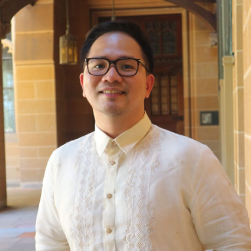
Dr. Pacifico Eric Eusebio Calderon
Head, Clinical Ethics Services; Associate Professor, College of Medicine, St. Luke’s Medical Center, Philippines
PhD Researcher, Faculty of Laws, University College London

Biography:

Dr. Pat McConville is a philosopher and bioethicist, and a lecturer in Health Ethics, Law and Professionalism at Deakin University, Australia. He has broad interests in phenomenology, philosophy of medicine, and bioethics. He has taught subjects in philosophy, bioethics, nursing, and medicine at Deakin, Monash, and other universities. In his current role, Pat teaches into the Medical Doctor course, and chairs the undergraduate Applied Ethics and postgraduate Health Law and Ethics units.

He mostly undertakes research in phenomenology of health and illness, particularly applications of phenomenology to healthcare, and has a keen interest in cardiac experience and heart-related medical interventions. Some of his research interests are informed by his own lived experience as a single-ventricle heart disease patient, about which he has written and published.

Dr. Pacifico Eric Eusebio Calderon is a physician and interdisciplinary scholar whose work spans health professions education, healthcare ethics and law, and medical professionalism. He is Associate Professor in the Department of Professionalism, Medical Ethics, and Humanities at St. Luke’s Medical Center College of Medicine. He also serves as Head of Clinical Ethics Services at St. Luke’s Medical Center; and Head of the Bioethics Unit at the National Children’s Hospital, Philippines. His work is actively engaged in clinical ethics, medical education, and healthcare policy. Pacifico completed his undergraduate degree in Biology (BSc) and medical degree (MD) at the University of Santo Tomas, Philippines. He holds a Master of Bioethics from the University of Sydney; and a Master of Education from Monash University, Australia. He has also held research fellowships at Kyoto University, Japan, and Ruhr University Bochum, Germany, where he explored various applications of clinical ethics in paediatrics. He is currently writing his PhD in Healthcare Ethics at the UCL Faculty of Laws in the UK.

Workshop Mode:

Half day

Who are the workshop’s targeted audience(s)?

Educators with responsibility for teaching ethics to practicing health professionals

Workshop 2 - Measuring What Matters: Practical Approaches for Healthcare/Bioethics Educators

This interactive workshop supports healthcare/bioethics educators in developing practical skills to evaluate ethics-related teaching in their own settings. Instead of focusing on ethics content, the session guides participants through how to examine the outcomes of teaching ethically complex topics such as end-of-life care, informed consent, or professionalism. Participants will learn how to define meaningful learning outcomes, choose between qualitative and quantitative approaches, and apply simple analysis methods such as pre-post surveys or thematic coding. Ethical considerations in studying one’s own teaching will be discussed throughout. Through structured group activities, participants will gain confidence in turning their experiences into practical research projects. By the end of the session, they will leave with a resource pack and a concrete starting point for developing methodologically sound and ethically sensitive studies that can contribute to the growing field of bioethics and health professions education.

Speaker

Dr. Veronica Ka Wai Lai, PhD, CPsychol
Research Associate, The Hospital for Sick Children (SickKids), Toronto, Canada

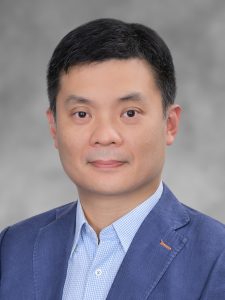
Dr. Wai Tat Wong, Research Fellow, CUHK Centre for Bioethics;
Associate Clinical Professor (Teaching), Department of Anaesthesia and Intensive Care, Faculty of Medicine, The Chinese University of Hong Kong

Biography

Dr. Veronica Lai is a research associate at The Hospital for Sick Children at the University of Toronto, where she concentrates on the methodological quality of designing, analysing, and reporting randomised controlled trials. She currently contributes to the design of outcomes for rare paediatric disease trials within RareKids-CAN, a national network supporting rare paediatric disease research in Canada. Her broader research programme links psychology, health, and implementation science. Veronica has experience in both qualitative and quantitative methodologies and has collaborated on international projects aimed at enhancing evidence standards in healthcare research.

Dr. Wai Tat Wong received the University Education Award and Faculty Teaching Award in 2024 at the Chinese University of Hong Kong. Dr Wong is heavily involved in undergraduate teaching in acute medicine, communication skills, professionalism, and clinical ethics. He serves as the chairperson of the Hong Kong Society of Critical Care Medicine (HKSCCM) and the Asian Pacific Bioethics Education Network (APBEN). His research spans medical education, clinical ethics, ICU end-of-life care, and organ donation.

Workshop Mode

Half day

Who is/ are the workshop’s targeted audience(s)?

Students and faculty members with a limited background in empirical research methods

Workshop 3 - AI in Education

This interactive workshop will showcase practical applications of two AI platforms in medical education, including a generative AI tool that enables tutors to facilitate scenario-based case discussions, and another that supports students in reflecting on their experiential learning journeys. Participants will actively engage in discussions around the responsible adoption of AI in healthcare education, including identifying current needs, addressing technical and ethical challenges, exploring emerging tools for application, and opportunities for collaboration.  This workshop will be co-hosted by Professor Qi DOU, Associate Professor in the Department of Computer Science and Engineering, The Chinese University of Hong Kong.

Speaker

Dr. Sin Nga Ann Lau

Co-Director, CUHK Centre for Bioethics; Assistant Dean (Health Sciences Education), Faculty of Medicine; Associate Director (Undergraduate Education), School of Biomedical Sciences, The Chinese University of Hong Kong

Prof. Qi Dou
Associate Professor, Department of Computer Science and Engineering (by courtesy) T Stone Robotics Institute, The Chinese University of Hong Kong (CUHK)
 

Biography

Dr. Ann Sin Nga Lau is currently the Assistant Dean (Health Sciences Education) of the Faculty of Medicine and the Co-Director of the CUHK Centre for Bioethics. She is also the Associate Director (Undergraduate Education) and Principal Lecturer in the School of Biomedical Sciences, and the Director of BSc in Biomedical Sciences Programme at CUHK. Being a Biomedical Scientist by training, Ann has expanded her interest to medical and biomedical sciences education, which further advanced into education leadership and management.

In addition to bioethics education, Ann has a broad teaching interest ranging from human genetics, endocrinology, to reproductive biology. She is the Leader of CUHK eLearning Community of Practice (eLearning CoP) on virtual reality (VR) as an emerging education technology, the Principal and Co-investigators of education or teaching and learning development projects worth over US$5 million covering virtual reality and metaverses in education, courseware development, peer-assisted learning, interprofessional education, teaching and learning for social good, examination tools, as well as assessment for learning. She is leading a faculty’s flagship project on “Artificial Intelligence in/as Medical Education”, and working with educators across disciplines to evaluate the impact of AI in education from the perspectives of education and bioethics. She is the recipient of the Faculty of Medicine Education Award 2019, and the Faculty of Medicine Education (Team) Award 2025.

Prof. Qi Dou is currently an Associate Professor at the Department of Computer Science and Engineering at The Chinese University of Hong Kong (CUHK). She is an affiliated member of CUHK T-Stone Robotics Institute, CUHK Institute of Medical Intelligence and XR, Hong Kong Multi-scale Medical Robotics Center, and Hong Kong Centre for Logistics Robotics. Her research is at the interdisciplinary field of AI and robotics technologies for medical applications including autonomous surgical robot, medical imaging, safe embodied AI, etc. Prof. Dou’s research work has received a number of international and national awards, including IEEE EMBS Early Career Achievement Award (2023), Ministry of Education Higher Education Outstanding Scientific Research Output Award — Second-class Award in Natural Sciences (2022), First Prize of Beijing Science and Technology Progress Award (2022), Hong Kong Institution of Science Young Scientist Award (2018). Her publications have received a number of prestigious best paper awards and nominations, including IJCARS-MICCAI Best Paper Awards (2021 & 2024), MICCAI Best Paper Award Finalists (2023 & 2024), MICCAI Young Scientist Publication Award (2022), IEEE ICRA Best Paper Award in Medical Robotics (2021), IEEE TBME Prize Paper Award (2021), MedIA-MICCAI Best Paper Award (2017). Her team’s research outputs appear in Science Robotics, Nature Machine Intelligence, Nature Communications (3), npj Digital Medicine (2), and top-tier conferences in AI, robotics and interdisciplinary fields. She serves as General Co-Chair for MICCAI 2026, Program Co-Chair for MICCAI 2024, IPCAI 2023, MICCAI 2022, and MIDL 2022, and Area Chairs for NeurIPS, CVPR, AAAI, ICRA, IROS, etc. She serves as the Associate Editor for international journals including IEEE Transactions on Medical Imaging, Medical Image Analysis, IEEE Transactions on Biomedical Engineering, IEEE Robotics and Automation Letters, Computer Assisted Surgery, and founding editorial board of npj Digital Surgery. Qi has received the Young Researcher Award (2024-25) and Exemplary Teaching Award (2022) at CUHK. Before joining CUHK faculty, she obtained Bachelor’s degree at Beihang University in 2014, Ph.D. degree at CUHK in 2018, and worked as a postdoc fellow at Imperial College London.